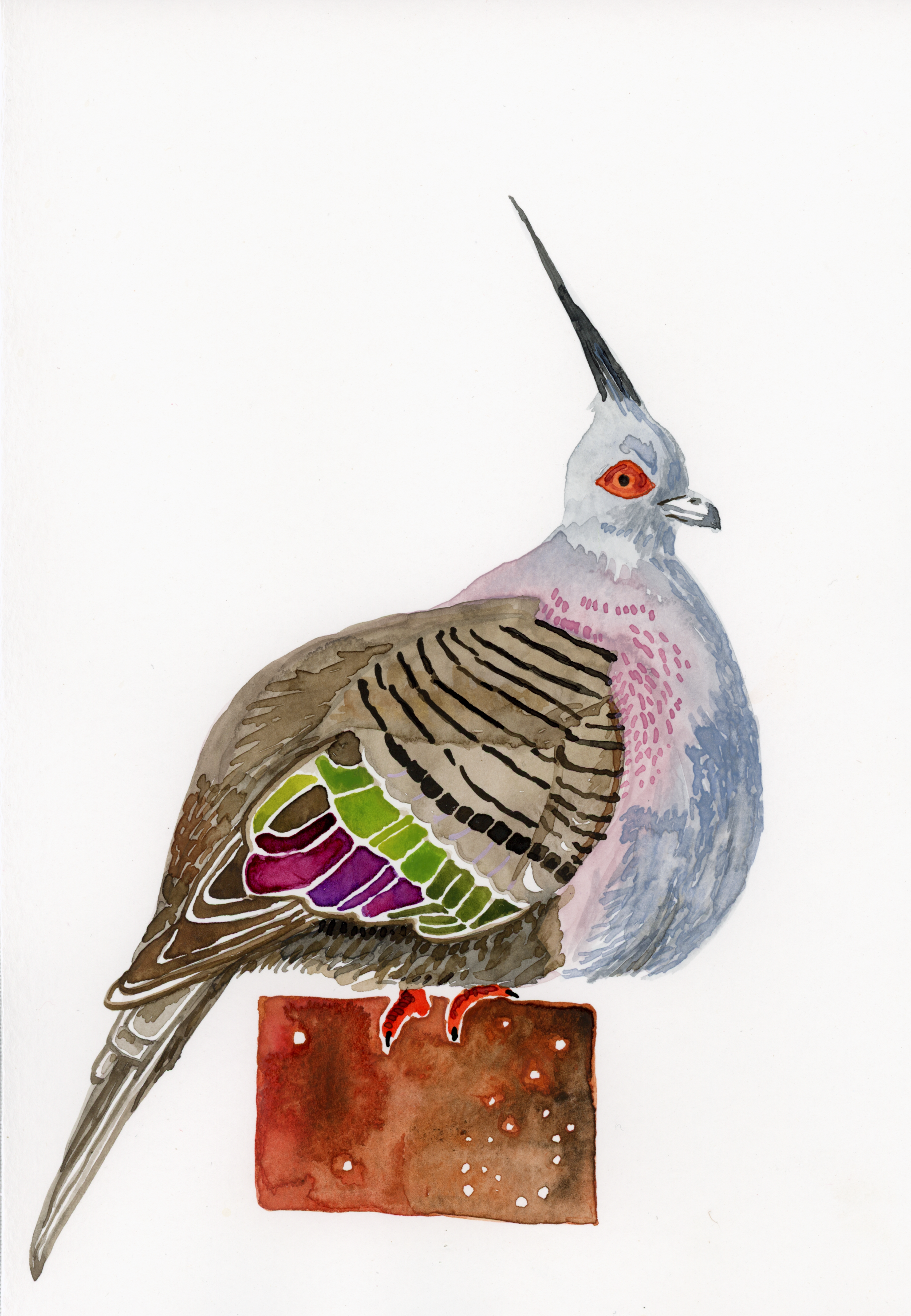
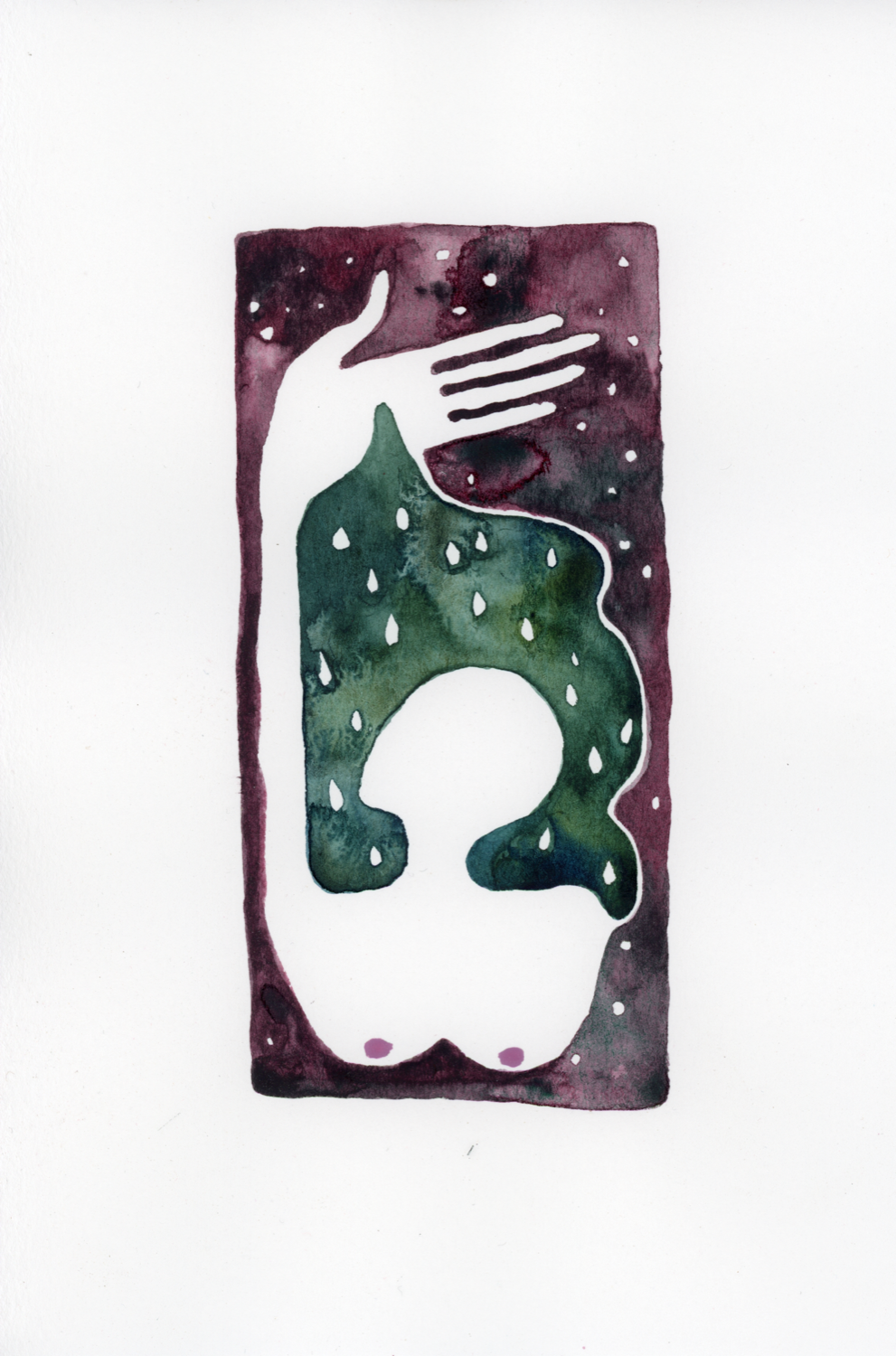

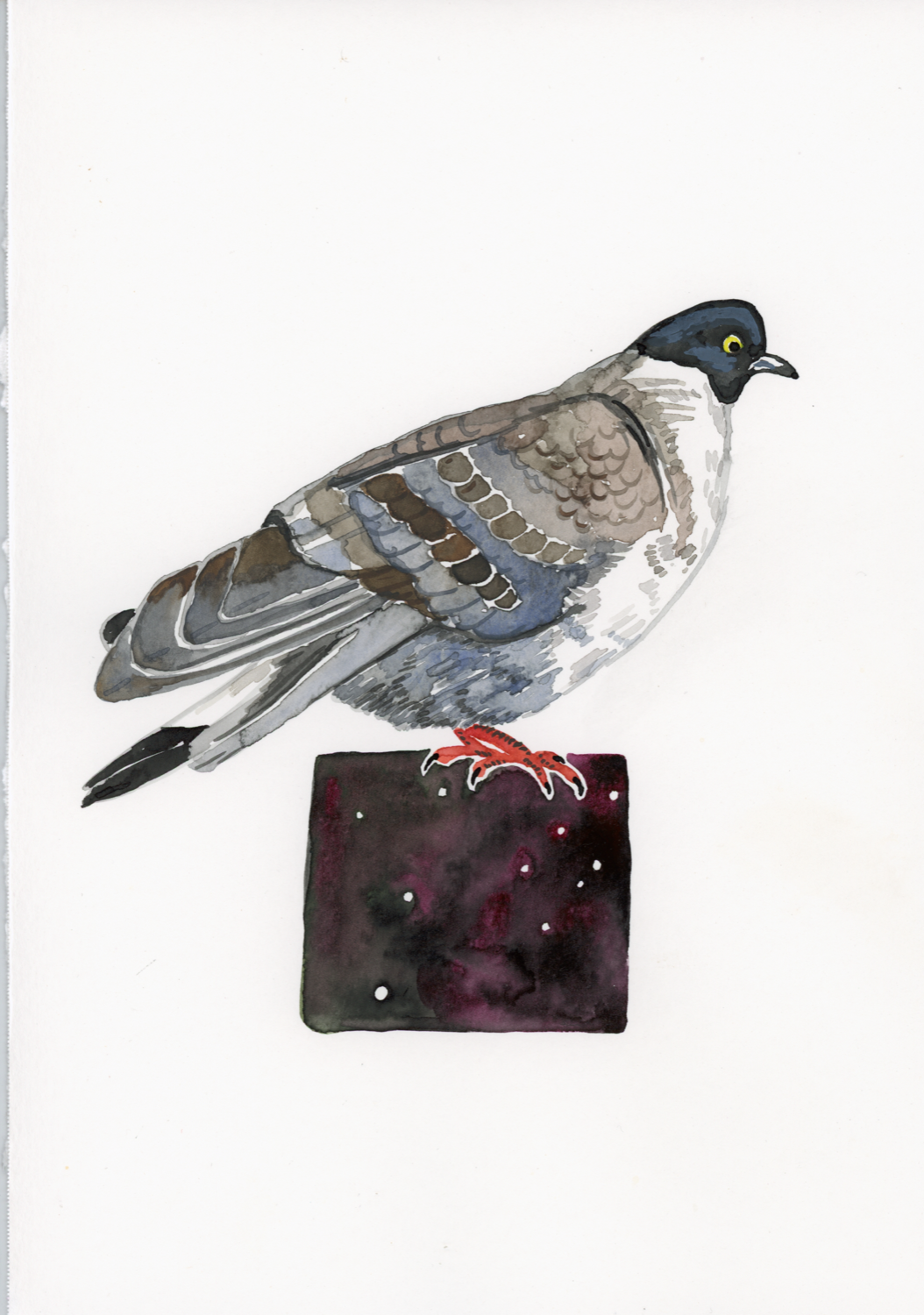
This is a watercolor painting of a Snow pigeon from Tibet. Last summer I went on a kick of painting beautiful pigeons from all around the world. (I do hope to still make more)
Here’s the information about this pigeon from Merlin - Often seen swirling around rock faces and cliffs in high mountain passes, this highland pigeon usually occurs in pairs or medium-sized flocks. Unlike any other pigeon, with a dark gray head, white neck and underparts, and gray wings with broad brown bars towards the tip. Occasionally visits villages and fields, but skittish and generally less approachable than Hill Pigeon and Rock Pigeon.
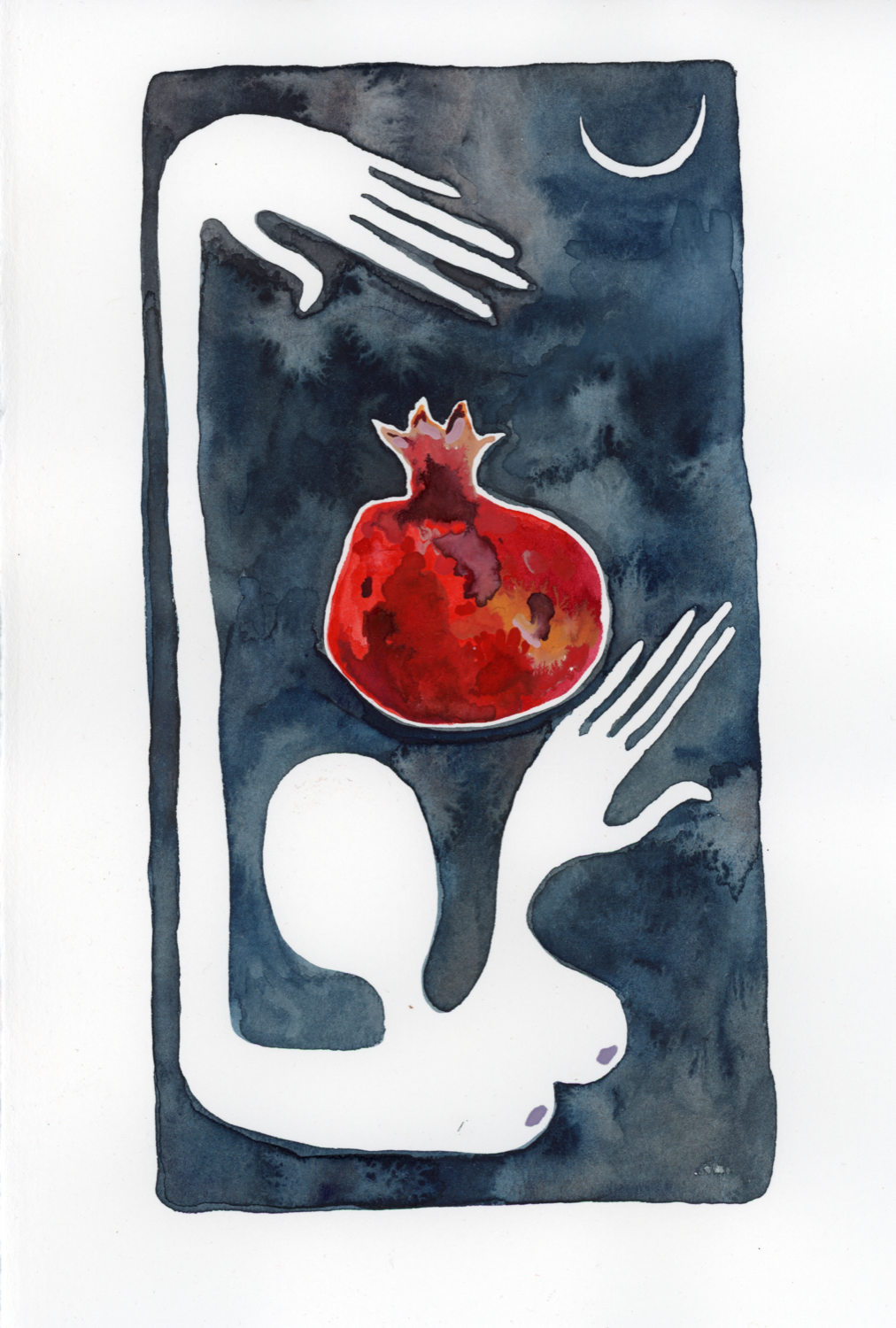
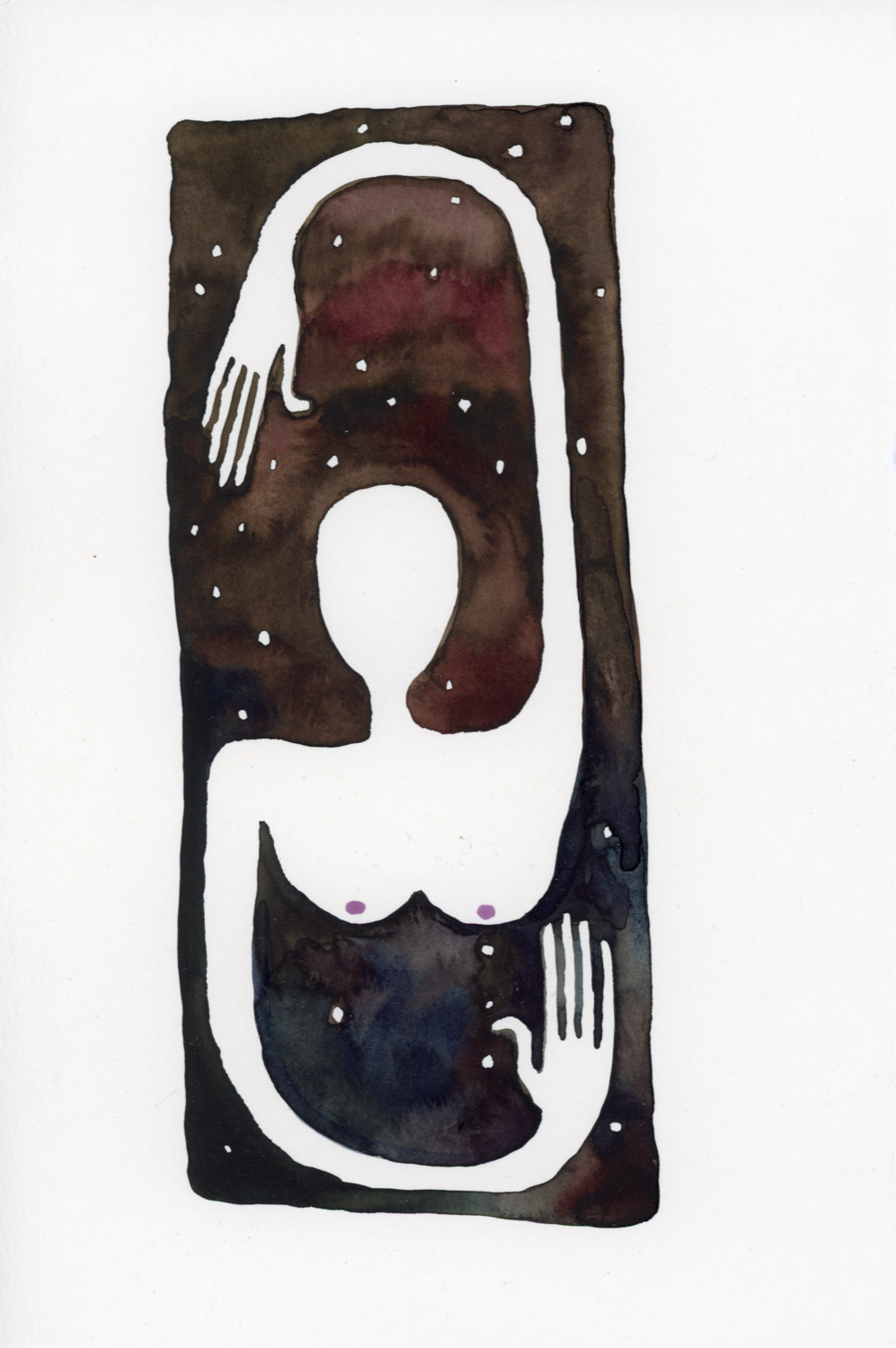
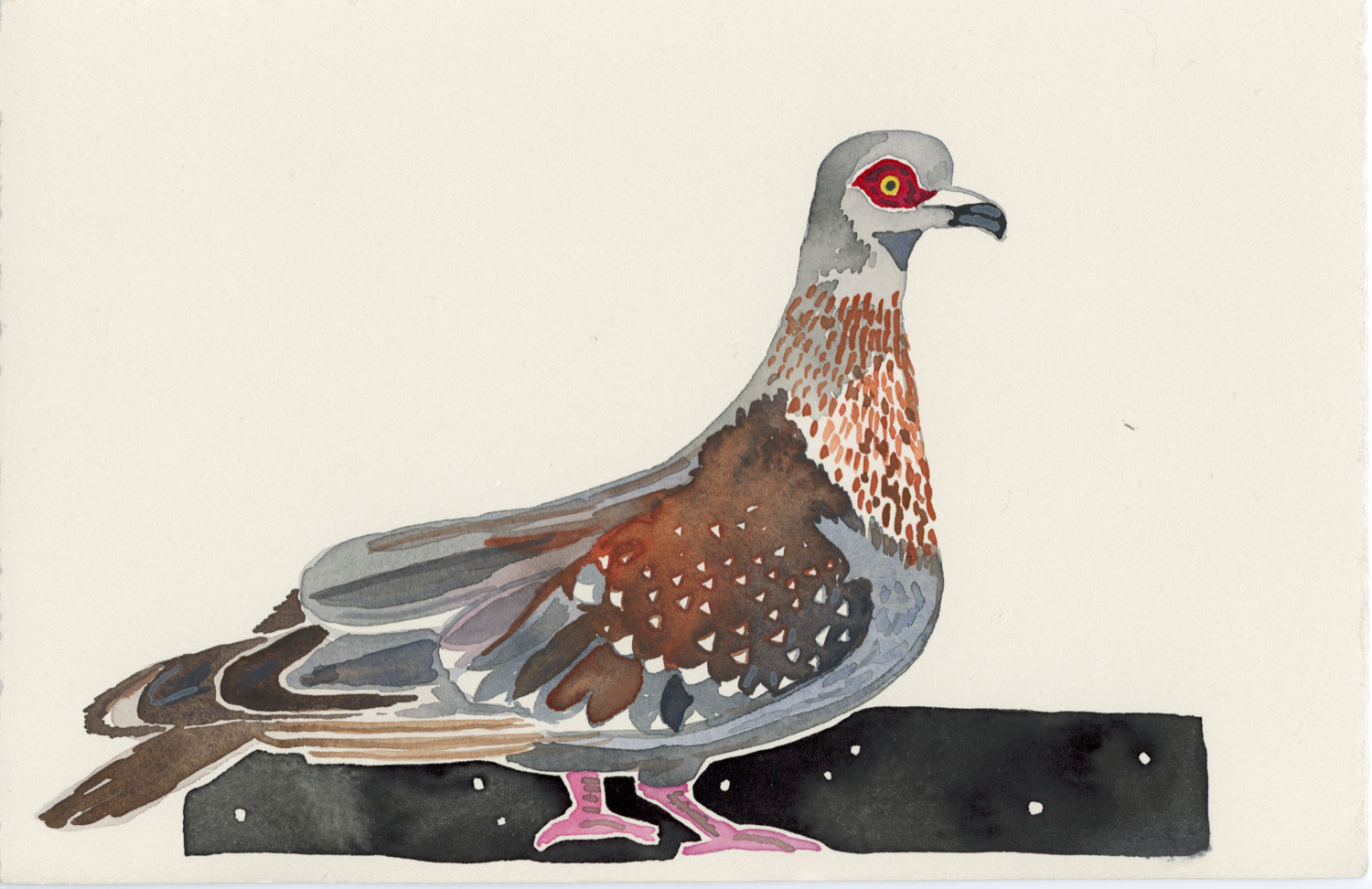
The speckled pigeon is from sub-saharan Africa and South Africa. Big, dark pigeon with white spots across the shoulder and a big red patch of bare skin around the eye. In flight, shows a gray tail band and rump. Found in many different open habitats, and nests in towns and cities and on cliffs. Only absent from thick forest. Common vocalizations are a “rrrour” call and an accelerating series of hoots. Somewhat similar to Rameron Pigeon, but largely absent from forest, and shows much larger wing spots and red rather than yellow bare facial skin.


This is a watercolor painting of a wedge-tailed green-pigeon, yes, those are the real colors. Last summer, I went on a kick of painting, beautiful pigeons, somewhere around the world, and this was the first of the series (I do hope to still make more) This beautiful pigeon can be found on the Indian subcontinent and southeast Asia.
Here’s the information about this pigeon from Merlin - Brightly-colored pigeon of lowland and hill forest. Both sexes are green with red feet and a bright blue bill, but males have an orange chest patch and wine-red patches on the wings which the female lacks. Females can be confused with the similarly plain Pin-tailed Green-Pigeon, but Wedge-tailed has a much shorter tail with a rounded tip. Like other green-pigeons, tends to occur in pairs and small flocks, but will congregate in large numbers at fruiting trees, usually high in the canopy. Listen for its distinctive song, a series of smooth ascending coos followed by a series of blubbering high-pitched notes.